
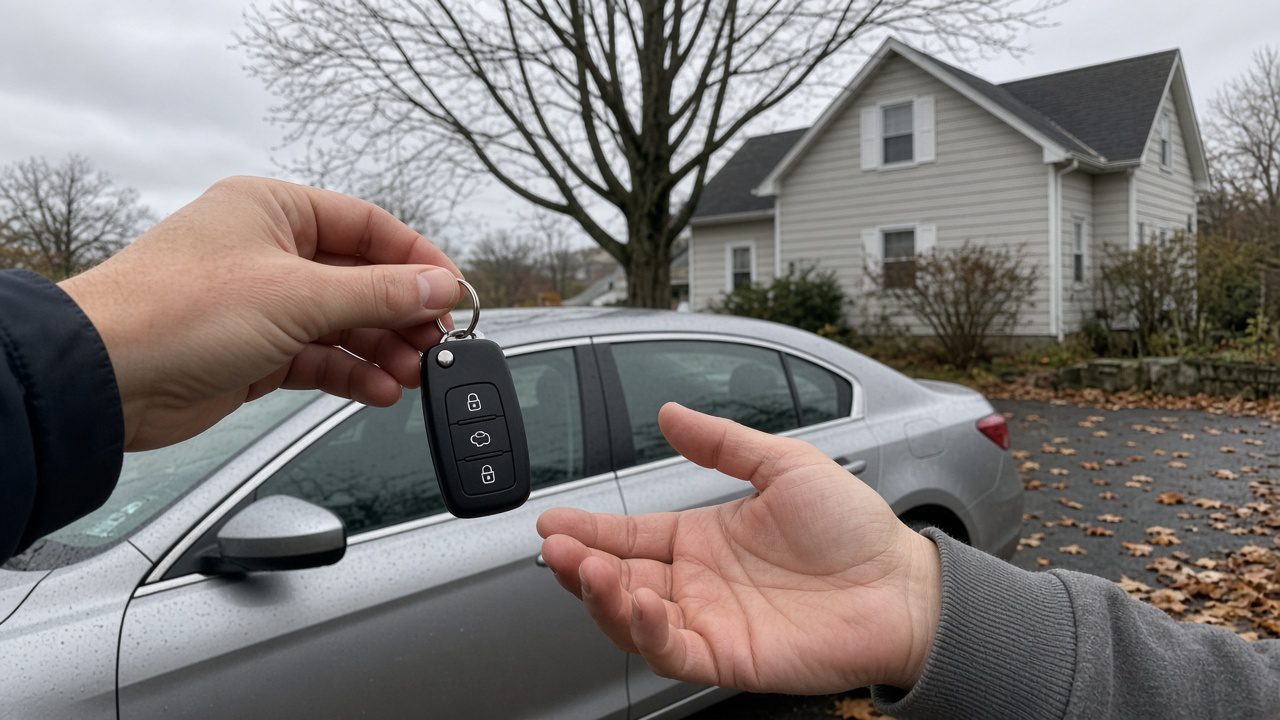
Short answer: in most cases, yours. In Pennsylvania, car insurance generally follows the car, not the driver. If you hand your keys to a friend or relative and they get in an accident, your policy is usually the first one that responds. Their own car insurance, if they have it, may only kick in after your limits run out or there’s an injury.
That surprises a lot of people, and this is the time of year it comes up. Kids come home from school for Thanksgiving, relatives fly in and need a ride to the store, a friend’s car is in the shop. Somebody borrows a car for a day, and then the phone rings.
Here’s how it usually breaks down.
Damage to the other car or the other people
If your friend causes the accident, the other driver’s car and injuries usually go on your liability coverage first. If the damage is bigger than your limits, your friend’s own policy may help pay the rest. This is one of the quiet reasons we talk about liability limits. Low limits can feel fine until someone else is behind the wheel of your car.
Damage to your car
Repairs to your own car usually come from your collision coverage, with your deductible. If you only carry liability, there’s usually nothing on your policy to fix your car. Your friend’s insurance typically doesn’t pay to repair a car they borrowed, either. That part often comes down to you and your friend working it out.
Whose record takes the hit
Because the claim goes on your policy, it can show up on your policy at renewal, even though you weren’t driving. Every company handles this a little differently, but plan on it being “your” claim.
When it gets more complicated
-
Permission matters. Coverage for an occasional driver usually depends on you actually saying yes. Someone who takes the car without asking is a different situation. OR having someone who is NOT a named insured (a child) let’s their friend borrow a car, when it’s the insured didn’t give permission. Permission can’t grant more permission to others. Make this clear!
-
Excluded drivers. If you’ve ever signed a form taking a specific person off your policy (often to save money on a household member’s record), that person usually has no coverage driving your car. Don’t lend to them.
-
Regular use is different from borrowing. A friend who borrows the car once is one thing. A roommate, a boyfriend or girlfriend, or a grown kid who drives it every week usually needs to be listed on the policy. If they aren’t, a claim can get messy.
-
The kid home from college. If your son or daughter is home from Edinboro or Penn State for break and drives the family car, make sure they’re listed. Most students away at school can stay on the policy, sometimes with a discount, but they need to be on it.
-
Delivery and ride apps. If the person borrowing your car uses it to deliver food or drive for a ride app, a regular personal policy usually doesn’t cover that.
-
Car-sharing apps. Renting your car out through an app is not the same as lending it, and personal policies often exclude it.
What to do before you hand over the keys
Ask yourself two quick questions. Do they have a valid license? And would I be comfortable if this accident went on my insurance? If the answer to the second one is no, it’s fine to say no, or to offer a ride instead.
If someone in your life is borrowing your car more than once in a while, give us a call and we’ll look at who should be on the policy and whether your limits make sense. It’s a five-minute conversation now instead of a long one after a crash.
Every policy is different, so check with your agent about your own situation.
Questions about lending your car? Call us at (814) 774-0272.